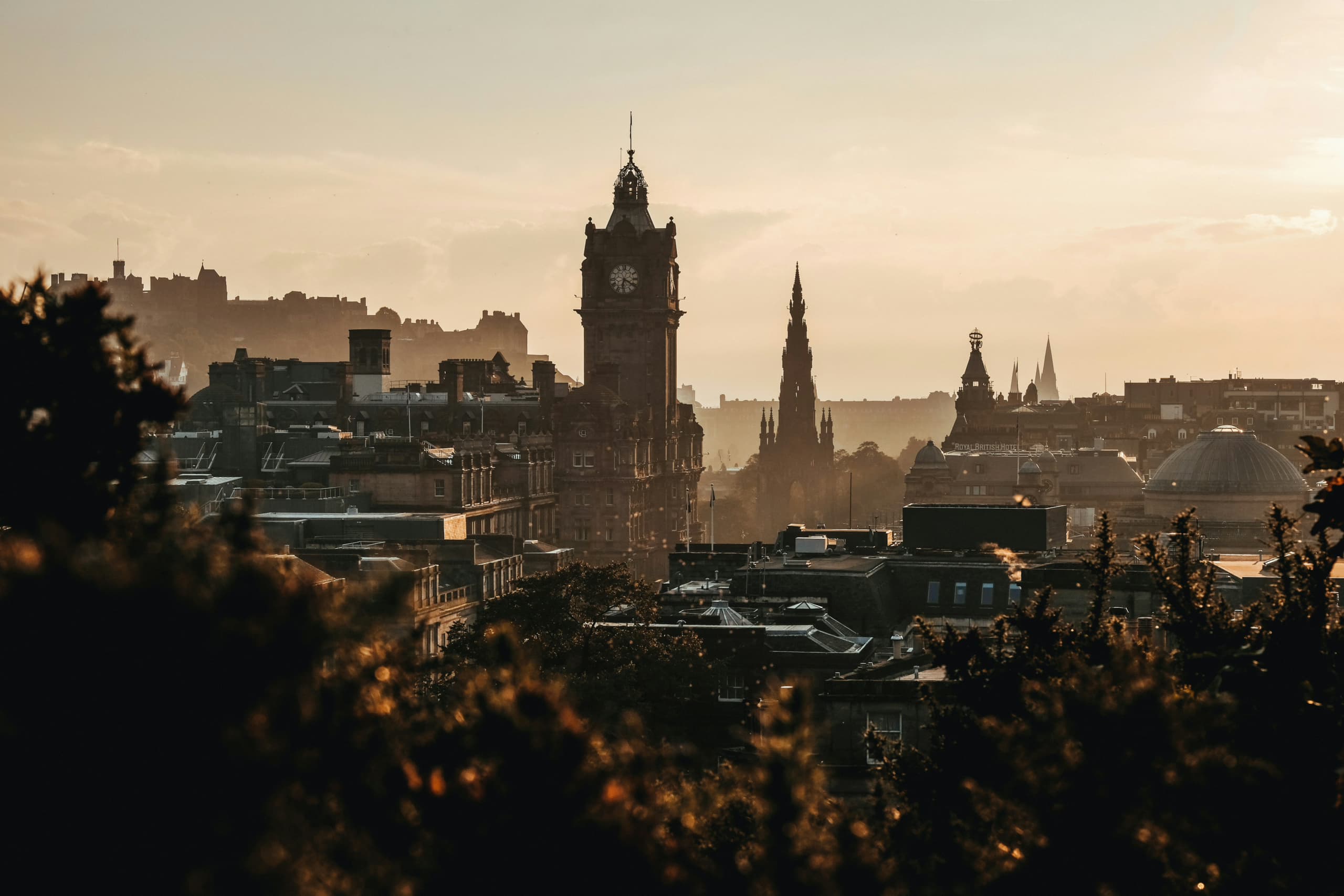
Edinburgh’s history is written in its windows. From Georgian sash and case in the New Town to Victorian tenement bays, this is how the capital’s streets got their look, and how they’re keeping it.
You can tell the age of almost any Edinburgh street from its windows.
The Georgian New Town was built with tall sash and case windows made up of small panes, six in the top sash and six in the bottom, held by slim glazing bars. Glassmakers at the time could not produce large sheets, so small panes were the only option, and the pattern became part of the city’s character. The Victorian tenements of Marchmont and Bruntsfield came later, once plate glass had arrived, so their windows hold far larger panes, often set into bay windows that push out from the building to gather light. Later still, the bungalows of Corstorphine were fitted with casement windows, many with a band of stained glass along the top. Each period of building left its own pattern, and nearly all of it survives.
A city that guards its glass
Edinburgh takes this seriously. The city has around fifty conservation areas, from the World Heritage site in the centre out to the Victorian suburbs, and window design is one of the things planning rules watch most closely. Historic Environment Scotland has published detailed guidance on sash and case windows which gives some idea of how much weight the style carries. There is good reason for it. When the windows on a Georgian terrace change, the whole street changes with them.
The difficulty for anyone who owns one of these homes is that a single-glazed sash window is a poor insulator. Anyone who has spent a winter in an older flat will know how cold the glass side of a room can be. Owners want to keep the appearance of the street, but they also have heating bills to think about.
How the trade caught up
For a long time this was a real dilemma. The choice was to live with the draughts or to fit modern plastic windows that never looked right on an older building. Over the past twenty years the trade has closed that gap. Modern sliding sash windows can be made with the same proportions and glazing-bar detail as the originals, with double glazing held inside the frame, and from the street a well-fitted example is hard to tell apart from the window it replaced.
Some local specialists have spent decades fitting windows across Edinburgh and describe it as the most demanding place they work. Listed buildings, conservation rules and tenement openings that are never quite the same size make the city a difficult customer, and the products have improved because of it.
Three centuries in the glass
The result suits Edinburgh. The New Town is 250 years old and still fully lived in. The tenements carry fibre broadband behind their bay windows. And the sash and case window, a design that only existed because glass once came in small panes, is being made again, warmer and quieter than before, because the city decided it was worth keeping.
The windows were never only a way of letting in light. They are a record of how the city was built, and it is still on display in every street.